COP31 · Antalya, Türkiye · 9–22 Nov 2026
COP31 in Antalya: the longest climate summit, no deal
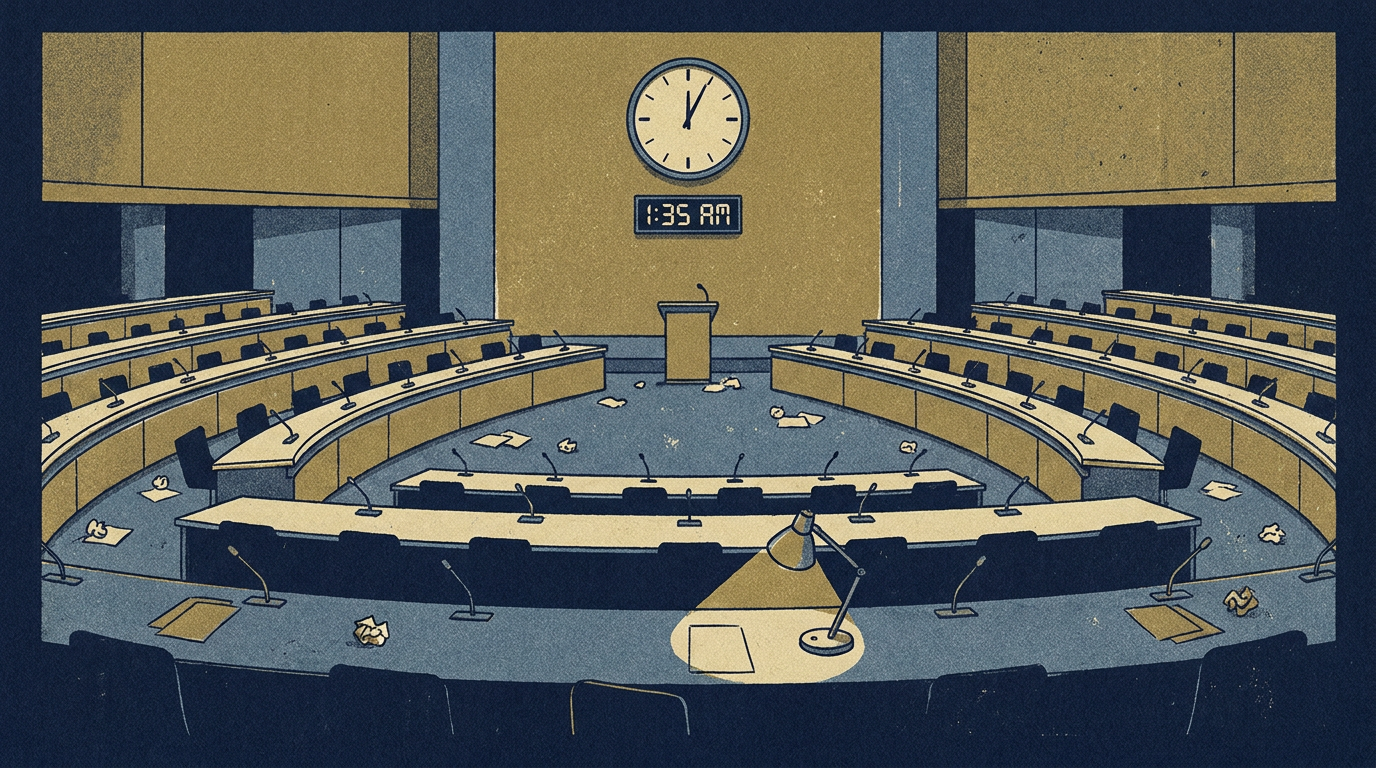
92,934 people registered. The talks ran more than 44 hours late. The final text forgot to mention fossil fuels, and the room noticed. A world record in meetings, if not in anything else.
vizmaya desk · 28 November 2026
Injury time
Scheduled to end Friday. Still talking Sunday afternoon.
COP31 was meant to close on Friday 20 November. It finally stopped on Sunday 22 November, passing the 44-hour overrun of COP25 in Madrid to become the longest COP on record.
No other UN process has turned "the deadline" into such a loose suggestion with such consistency.
Sources: Climate & Capital Media (citing The Independent), University of Leeds Priestley Centre, CBS News
Climate talks now overrun the way trains do: reliably
The weekend nobody booked
How to spend 48 extra hours not agreeing
The closing plenary opened on Friday night, then paused. It came back after midnight on Sunday, more than 30 hours late, to look at a text that would not pass.
Sources: Earth Negotiations Bulletin (IISD), Erkan's Field Diary, Climate & Capital Media
- Fri 20 NovThe scheduled final day. Delegates' return flights, presumably, also scheduled.
- Fri, about 9:30 pmClosing plenary convenes. Then stops.
- Sun 22 Nov, just after midnightPlenary briefly resumes, more than 30 hours after the conference was due to end.
- Sun, 12:45 pmThe CMA draft of the "Antalya Pact" is issued.
- Sun afternoonCOP31 passes COP25's 44-hour overrun. A record nobody asked for.
- Sun 22 NovBoth Antalya Pact cover decisions fail. Dozens of smaller decisions pass.
Record turnout
The biggest climate summit ever, by headcount
92,934 people registered to attend in person, provisionally the largest COP in history, ahead of COP28 in Dubai.
For scale: that is more than three Paris summits. Paris, you will recall, produced an agreement.
Sources: Carbon Brief, COP31; COP30; COP29; COP15, COP21. Provisional = registered before the summit; final = counted attendance, usually at least 10,000 lower.
More people than ever came to agree on less
Plus-ones
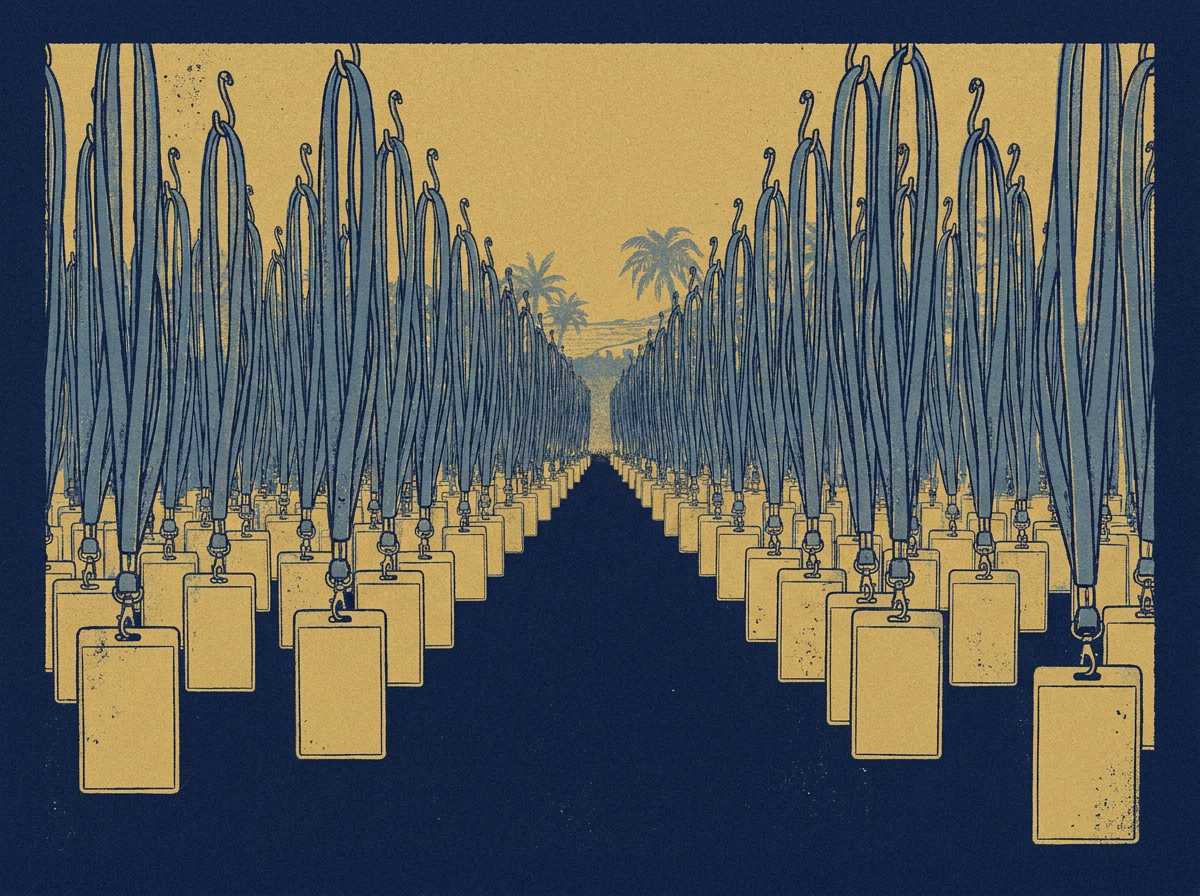
Türkiye invited 14,285 guests. Belém managed 1,324.
"Guests of the host country", per summit: hospitality, but make it tenfold
Source: Carbon Brief, UNFCCC provisional participant lists
Delegation sizes
The host brought 2,950 badges. America brought none.
Türkiye sent the largest delegation. The United States sent nobody for the second year running, having filed to leave the UN climate convention from 27 February 2027.
Sources: Carbon Brief (party plus overflow badges); CBS News; ENB
Largest delegations at COP31, badges per country
A summit with joint custody
Two countries ran it. That went about as well as it sounds.
Australia had wanted to host in Adelaide. The compromise, reached in November 2025, split the job, with Bonn as the fallback if nobody agreed.
Türkiye
Environment minister Murat Kurum presided over the conference in Antalya.
Australia
Climate minister Chris Bowen ran the talks, later blaming "unbridgeable red lines".
Track changes
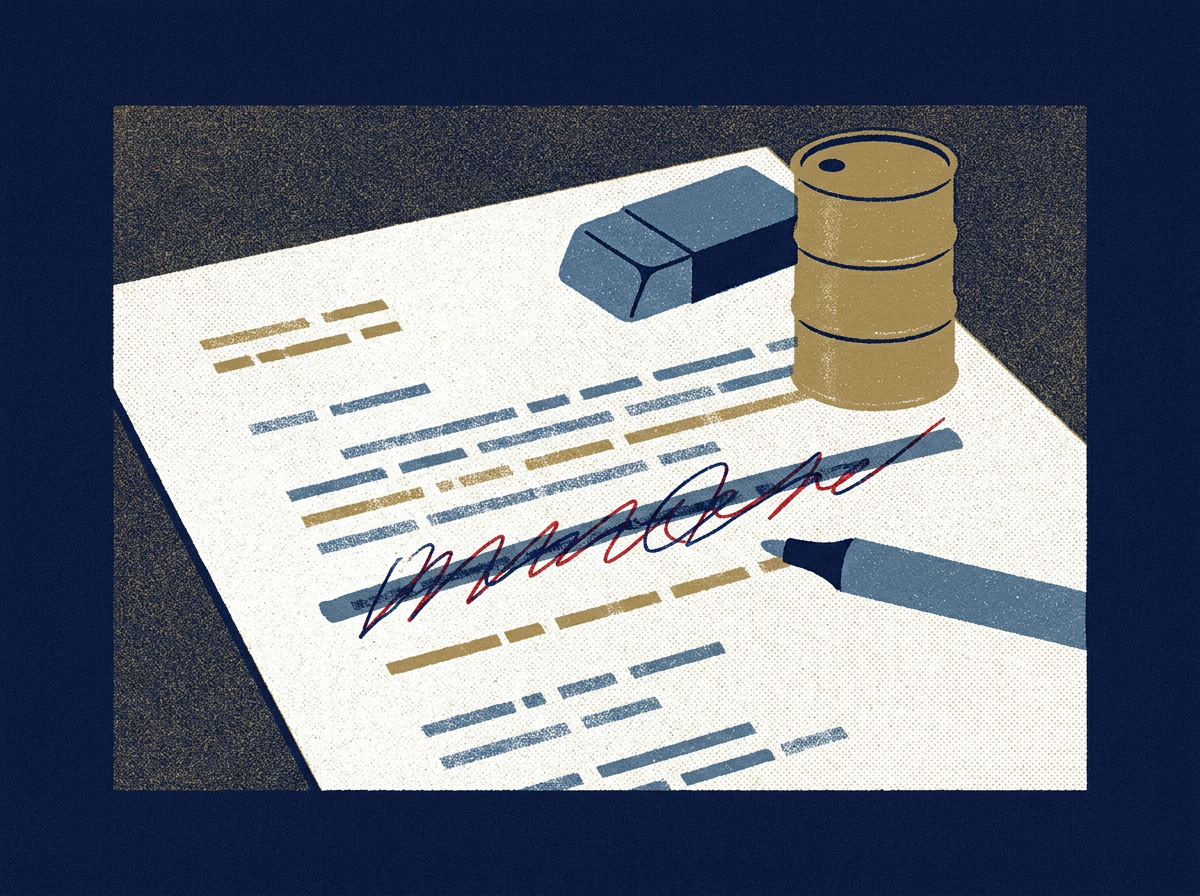
The incredible shrinking fossil fuel clause
- MondayFirst draft calls for "accelerated action to phase out fossil fuels".
- ThursdayThe text no longer mentions coal, oil or gas at all. Bold editing.
- SundayThe Antalya Pact, still fossil-free in the wrong sense, is rejected.
Sources: CBS News, Climate & Capital Media
What it did say
Plug things in. Bury the carbon. Don't name the source.
The draft pact wanted electricity to supply 35% of global final energy by 2035, up from about 23%, and carbon capture scaled toward gigatonnes a year.
Panama said the text "relied on CCUS". Which is a polite way of saying the plan was to keep digging and then dig a second hole.
Sources: Erkan's Field Diary (draft FCCC/PA/CMA/2026/L.25), Climate & Capital Media, ENB
The one number the Pact was brave about, now on a shelf
The room, divided
Europe and the islands said no. The petrostates were fine with it.
The EU, Norway, the UK and small island states opposed adopting a pact with no fossil fuel language. China, Bolivia, Paraguay, Venezuela, Iran and Syria, plus the African and Arab Groups, signalled they could live with it.
Source: ENB names these Parties "and others"; groups shown only where countries were named. Map: Natural Earth via world-atlas.
Overheard in the plenary
"We will not endorse a cover decision or an Antalya pact that does not even mention fossil fuel."Darragh O'Brien, Ireland's climate minister, for the EU
"We cannot continue to be held hostage by petroleum producers."Juan Carlos Navarro, Panama
"In the end, we did not impose this text on anyone."Murat Kurum, COP31 President
Translation from the diplomatic: the text was so unpopular that not imposing it was the only option left.
Source: CBS News
The receipts
The money that did survive, measured against the bill
The loss and damage fund got requests from 119 developing countries needing $2.8 billion. It had allocated $342 million. The Adaptation Fund raised $50 million against a $300 million yearly target.
Tripling adaptation finance by 2035 survived too, as something countries "agree to discuss". The draft's $120 billion figure did not.
Sources: Erkan's Field Diary and ENB (FRLD figures; received as of 31 July 2026), Climate & Capital Media (Adaptation Fund)
Need versus delivery, US$ millions: the grey bars are the bill
Meanwhile, the planet
Progress, of a sort: we are now only headed for 2.5°C
If every current plan were carried out, the world would be on track for just over 2.5°C of warming, the draft text said, down from more than 4°C before Paris. January to September 2026 already averaged 1.47°C.
The UN Environment Programme now calls overshooting 1.5°C "unavoidable".
Warming above pre-industrial, °C: a scale where "better" still means "hot"
The long view
Thirty-one summits. The line did not notice.
Carbon dioxide at Mauna Loa averaged 360.97 parts per million in 1995, the year of COP1 in Berlin. By 2023 it was 421.08. In October 2026, the monthly reading was 426.69.
Source: NOAA Global Monitoring Laboratory, Mauna Loa annual means (file runs to 2023) and the October 2026 monthly mean
CO₂ at Mauna Loa, ppm: up every single year there was a COP
Next stop
Same time next year, in Addis Ababa. Bring a charger.
"There may be no consensus in the negotiating room. There is no ambiguity in the science." So said António Guterres. The science, for its part, has never needed 44 hours of overtime.
Sources: ENB, Climate & Capital Media, CBS News
Sources & method
Sources & method
- Earth Negotiations Bulletin (IISD), Antalya Climate Change Conference summary: timing, registrations, who opposed or accepted, decisions, COP32, warming figures.
- CBS News, COP31 ends with no agreement: quotes, draft fossil fuel language, 2.5°C projection.
- Climate & Capital Media, COP31 final wrap: 44-hour COP25 record (citing The Independent), Thursday text, 23% electricity, Adaptation Fund, COP32 dates.
- Erkan's Field Diary, COP31 outcomes: draft L.25 content, loss and damage fund figures.
- Carbon Brief, delegates to COP31, plus its COP30, COP29 and history analyses.
- University of Leeds Priestley Centre: COP30 ended 27 hours late.
- NOAA Global Monitoring Laboratory: Mauna Loa CO₂ annual means and October 2026 monthly mean.
- Wikipedia, 2026 UN Climate Change Conference: hosting arrangement.
Method: attendance mixes provisional registrations (COP29 to COP31) with final counted attendance (earlier COPs); the two are marked and are not strictly comparable. COP31's overrun is shown as "44+" because sources say only that it passed COP25's 44 hours. The opposition map shows only countries the ENB names; "and others" are not shown. Illustrations are AI-generated, not photographs. More stories at vizmaya.fyi/stories.