US data center water use, 2014 to 2023. It grew from 5.6 billion gallons to 17.4 billion.
Data center water use tripled in nine years.
The 2028 bars are projections, not facts. Even the high case is 73 billion gallons.
Source: Lawrence Berkeley National Laboratory, 2024; 2028 range from NIWR.
All of it is under 1% of one day of world desalination.
We came for a flood and found a puddle. US data centers drink 0.18 million cubic meters a day. World desalination makes 91.5 million.
A cubic meter is 1,000 liters. Gallons converted by vizmaya desk. Sources: LBNL; NIWR; IDRA via EU Blue Economy Observatory; Acwa.
So volume is not the story.
One big plant dwarfs the whole fleet. Jubail in Saudi Arabia makes 600,000 cubic meters a day, more than 3x what all US data centers use.
The buyer is new, not the volume.
A data center needs water at one site, every hour, with no outages. A city signs a deal for decades.
We think that favors small, modular, on-site systems. That is our view, not a reported fact.
Waste heat can make water, says one startup.
Endeavour and Trevi Systems announced a deal on 22 October 2026. They say 1 megawatt of computing can yield up to 200,000 gallons of water a day from brackish groundwater.
At 100 megawatts, that is 20 million gallons a day. Endeavour says its own sites will be the first proof.
Salty oil-field water is a free feedstock.
The Permian Basin makes about 8 billion gallons of waste water a day. That is about 170 times the daily direct use of all US data centers (our math).
A University of Texas team found today's desalination can clean it for cooling.
Energy is the bill. Recovery cuts it by about 60%.
A pressure exchanger reuses the pressure in the leftover brine. Energy Recovery sells it.
Source: AMPAC vendor guide. Midpoints 4.5 vs 11.5 kWh/m³.
Who sells the shovels? A first screen.
| Company | Role | Latest hard number |
|---|---|---|
| Acwa | Developer and operator | 9.7M m³/day portfolio, 16 countries |
| Veolia (VIE) | Operator | About €200M of new Oman and UAE deals |
| Energy Recovery (ERII) | Pressure exchangers | $6.95 close, 27 Nov. $86M cash, zero debt |
| Consolidated Water (CWCO) | Operator and builder | $25.01 vs $39.12 52-week high |
| Trevi Systems | Heat-driven, brine-free (private) | Up to 200,000 gal/MW/day, company claim |
Sources: company releases and earnings, Yahoo Finance quotes via Firecrawl, 27 Nov 2026. Not a recommendation.
The boom is not in the numbers yet.
Energy Recovery's revenue fell 65% in Q3 2026. Management still sees about $30 billion of desalination and reuse spending from 2027 to 2030.
Source: Energy Recovery Q3 2026 results; call summary.
Acwa: the Gulf engine slows, not stops.
H1 2026 net profit was SAR 653 million vs SAR 909 million a year earlier. Some financial closes now slip 6 to 12 months.
Still, 0.9 million m³ a day of desalination came online in the half.
Veolia and Consolidated Water: two ways in.
Veolia wants to double operated desalination capacity by 2030. Consolidated Water trades near its 52-week low, with Hawaii permits delayed.
What can break the thesis
- Dry cooling spreads and data centers need less water.
- Gulf contracts keep slipping.
- Heat-driven desalination stays a pilot.
- Water is cheap where it is plentiful.
Verdict: desalination is a good bet. Data centers are the smaller reason.
The volume comes from Gulf governments. Data centers add a new kind of buyer and a loud headline.
Watch Gulf order flow first. Then watch for a data center deal with real tonnage.
- Energy Recovery megaproject sales returning.
- Acwa financial closes in the second half.
- First Trevi output at a live data center.
Sources and method
LBNL 2024 US Data Center Energy Report (17.4B gal, via secondary summaries). NIWR 2028 range. EU Blue Economy Observatory (91.5M m³/day, 2024; other sources cite up to 130M). Endeavour and Trevi release (company claims). Anthropocene on UT Austin study. Acwa H1 2026. Veolia via TradingView. Consolidated Water, Motley Fool. Market size: $27.8B in 2025.
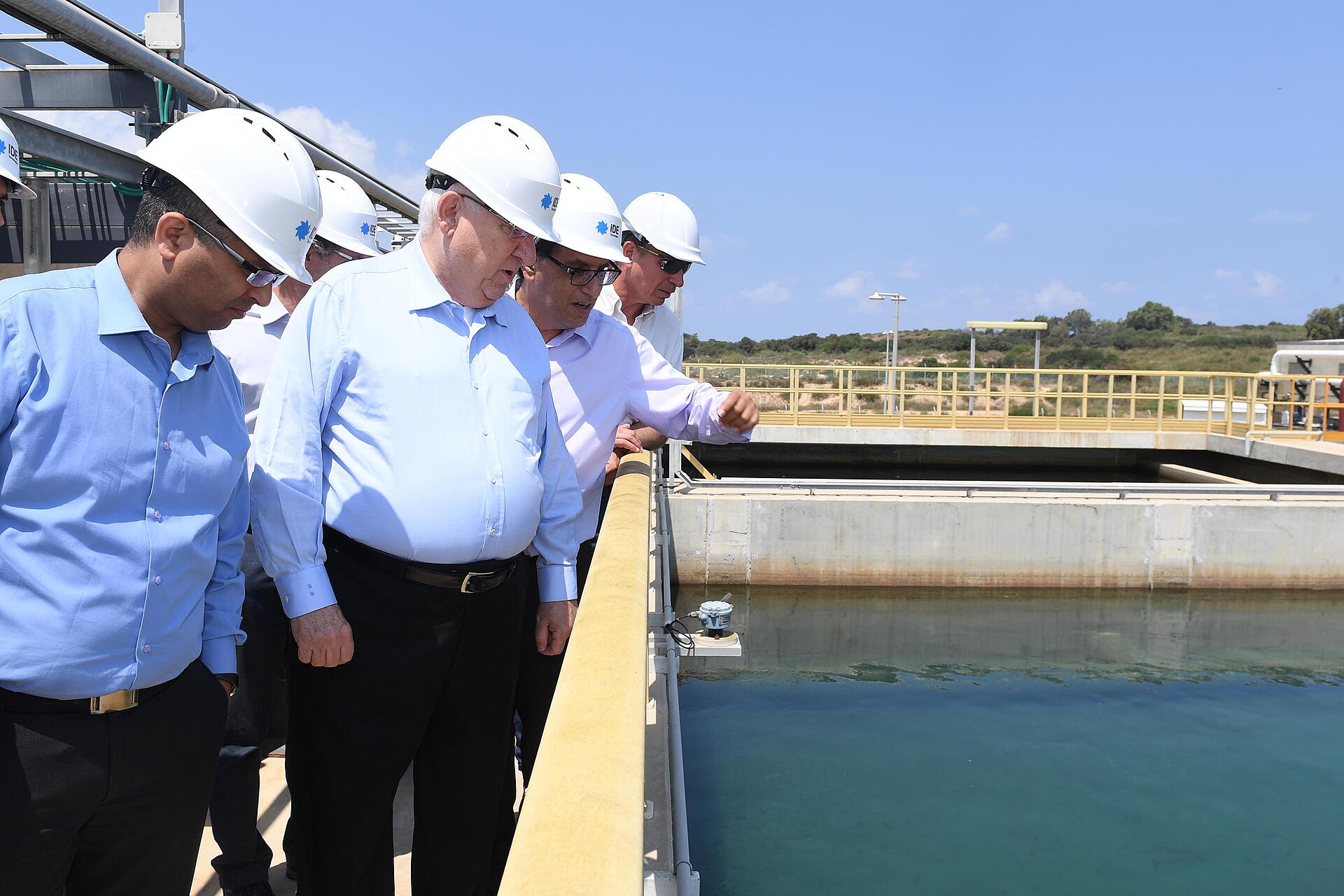
Method: gallons converted at 3.785 L. Cost ranges are vendor estimates. Prices are 27 Nov 2026 closes. Image: Mark Neyman / Wikimedia Commons, CC BY-SA 3.0.
Data centers drink little. Desalination may still win.
The AI boom made water a headline. We tested whether it makes desalination an investment. Start with how much water they really use.
Their water use tripled.
US data centers went from 5.6 billion gallons in 2014 to 17.4 billion in 2023. Projections for 2028 reach 73 billion. Is that big?
Next to desalination, it is a puddle.
US data centers use 0.18 million cubic meters a day. The world makes 91.5 million. So why bet on desalination at all?
One plant beats the whole fleet.
Jubail in Saudi Arabia makes 600,000 cubic meters a day. That is more than 3x all US data centers. The volume lives in the Gulf.
What changes is the buyer.
Data centers need water on one site, every hour. That is a different customer from a city.
Their heat could make the water.
One startup claims 200,000 gallons a day per megawatt of computing. It is a company claim. Is there outside evidence?
Texas researchers say yes.
Oil fields make about 8 billion gallons of salty water a day. Today's desalination can clean it for cooling.
Energy is the bill.
Seawater plants with energy recovery use 3 to 6 kWh per cubic meter. Without it, 8 to 15. Who sells that part?
A first screen of sellers.
Operators, equipment makers and one private heat-driven startup. Now the hard part: do the numbers show a boom?
Not yet. Revenue fell 65%.
Energy Recovery sold $0.9 million of megaproject gear in Q3, down from $18.4 million. Management expects $30 billion of spending from 2027 to 2030.
The Gulf is slowing, not stopping.
Acwa's profit fell and closes slipped 6 to 12 months. Veolia keeps signing. What could still go wrong?
Four things can break it.
Dry cooling, late Gulf contracts, pilots that stay pilots, and cheap local water.
The verdict.
Desalination is a good bet. Data centers are the smaller reason. Watch Gulf orders first.