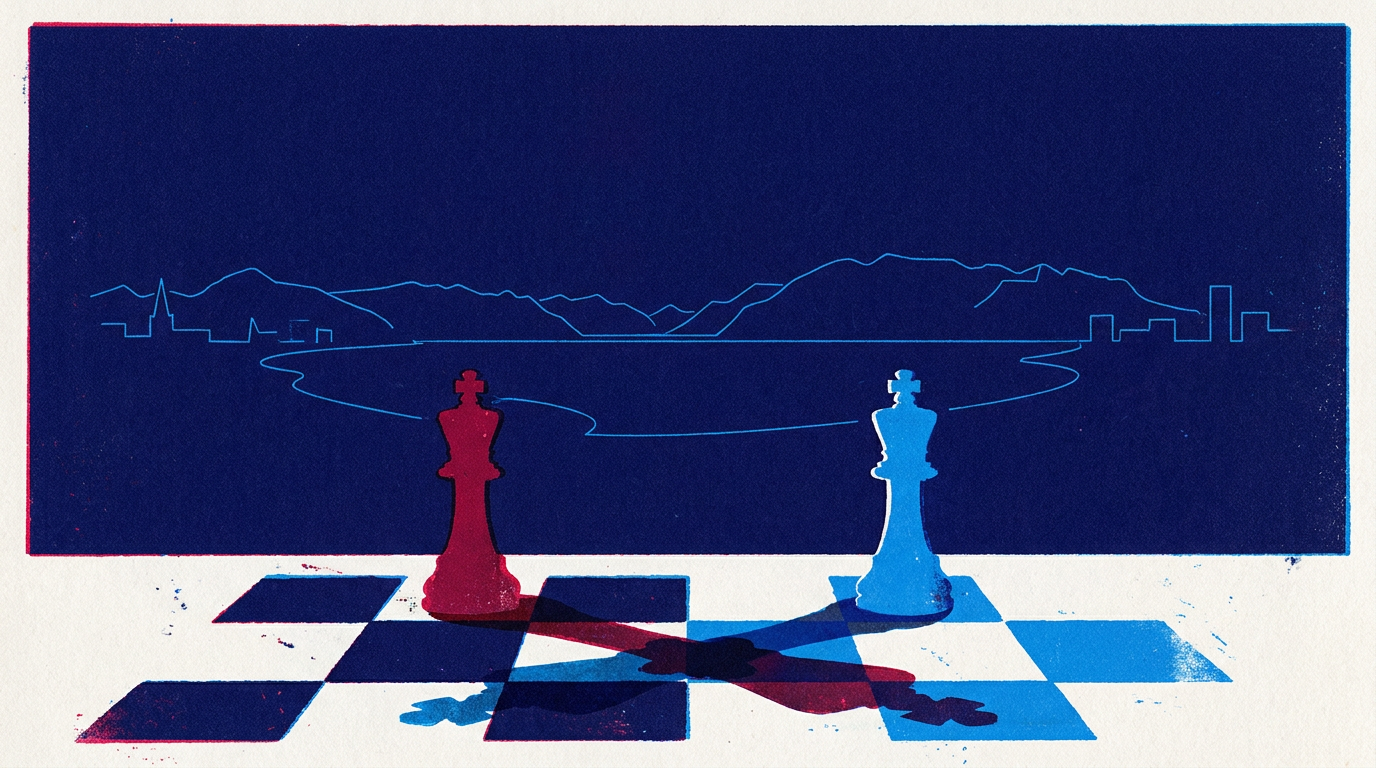
Three games in Geneva, three draws. A short book of how two 20-year-olds got here, and what the next eleven games ask of them.
Illustration: AI-generated
vizmaya desk28 Nov 2026
Tap the right page to turn forward, the left to go back. Drag a page, or use the arrow keys.
“Read as one page” lays the whole book out as one column.
Written before Game 4, on Saturday 28 November.
Chapter I
Level after three games
1.5 – 1.5
Gukesh · Sindarov
The FIDE World Chess Championship began in Geneva on Tuesday 24 November. Defending champion D Gukesh of India and challenger Javokhir Sindarov of Uzbekistan drew all three games. Game 4, with Gukesh as White, starts today at 15:00 Geneva time (7:30 pm in India).
The champion is rated 72 points below his challenger
Gukesh peaked at 2794 in October 2024. By November 2026 he was at 2710, world No. 26. Sindarov is at 2782, No. 4.
Gukesh Dommaraju was born in Chennai on 29 May 2006. He became a grandmaster on 15 January 2019, aged 12 years, 7 months and 17 days.
In December 2024 in Singapore he beat Ding Liren 7½–6½ (three wins, two losses, nine draws). He was 18 years and 195 days old, the youngest undisputed world champion in history.
18y 195dage at title
2794peak rating, Oct 2024
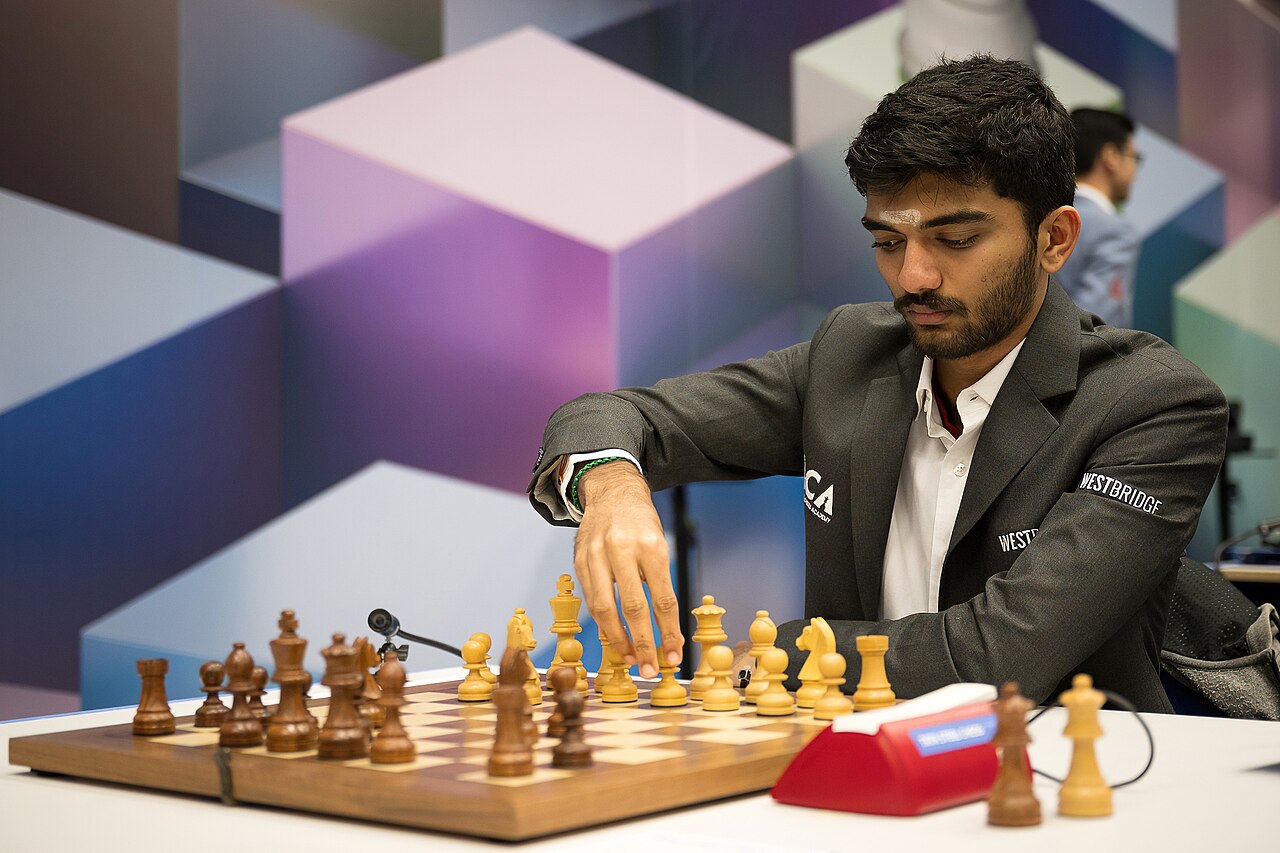
Gukesh at Tata Steel Chess, Wijk aan Zee, January 2025, five weeks after winning the title. Photo: Frans Peeters / Wikimedia Commons, CC BY-SA 2.0
Since that peak his rating has slid 84 points, and his world ranking from No. 3 in March 2025 to No. 26. He comes to Geneva as the title holder and the lower-rated player.
Chapter III
The challenger from Tashkent
Javokhir Sindarov was born in Tashkent on 8 December 2005, less than six months before Gukesh. He made grandmaster at 12 years, 10 months and 8 days.
Last November he won the FIDE World Cup, beating Wei Yi in a tiebreak. He was 19, the event's youngest winner and its first from Uzbekistan. He turns 21 on 8 December, the day Game 12 is scheduled.
2782rating, Nov 2026
No. 4world ranking
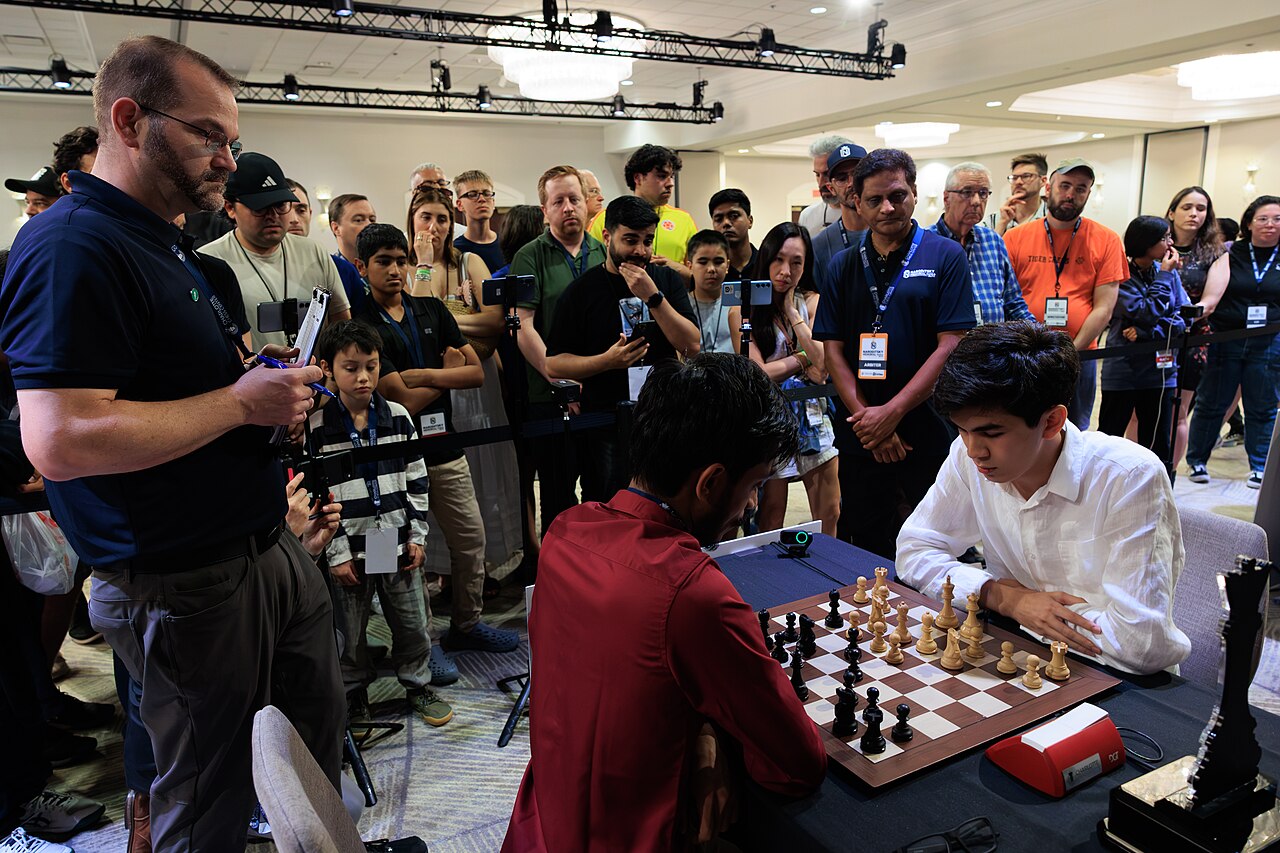
Sindarov against Aravindh Chithambaram in a play-off at the Naroditsky Memorial Rapid, July 2026. Photo: Kelly Centrelli / Charlotte Chess Center, Wikimedia Commons, CC BY 4.0
His rise has been steep and recent: 2745 going into the Candidates in March, 2782 by November.
Chapter IV
Two roads to Geneva
Both made grandmaster within three months of each other, in late 2018 and early 2019. Then their paths split.
Gukesh got there first: he won the 2024 Candidates at 17 and the title that December.
Sindarov's climb came in a rush: the World Cup in November 2025, then the Candidates five months later, in April 2026.
Gukesh got there first; Sindarov came fast
Sources: Gukesh, Sindarov (Wikipedia). GM dates computed from ages given there.
Chapter V
A Candidates won with a round to spare
The Candidates Tournament, which picks the challenger, ran in Pegeia, Cyprus, from 28 March to 16 April 2026. Sindarov scored 10 out of 14, with six wins.
He clinched it in round 13 with a draw against Anish Giri and finished a point and a half clear. His 10 points beat the 9½ Ian Nepomniachtchi scored in 2022.
Sindarov's 10 points set a new mark
Points out of 14 games. A win is worth one point, a draw half.
Before Geneva the two had met three times at classical chess, the slow kind a title match is played at. Sindarov won two, one of them at the 2022 Sharjah Masters, and the third, at Tata Steel 2026, was drawn.
Counting rapid and blitz as well, Sindarov led 4–1 with two draws. Gukesh's one win came in a rapid game at the 2026 Super Rapid & Blitz Poland.
Before Geneva, Sindarov led 4–1
One square per game, grouped by result, not in the order they were played.
Grandmaster dates are computed from the ages Wikipedia gives. Game 1's move count comes from one source. Written before Game 4; ratings are the November 2026 FIDE list. Photos: Frans Peeters (CC BY-SA 2.0) and Kelly Centrelli / Charlotte Chess Center (CC BY 4.0) via Wikimedia Commons. Cover: illustration, AI-generated. More from the desk at vizmaya.fyi stories.
½
Three games, three halves each. Game 4 is the next page, and nobody has written it yet.